Showing posts with label 2013 (pub. year). Show all posts

Sunday, October 1, 2017

Lean on Both Substance and Character


The Curse of Dracula by Marv Wolfman. Illus by Gene Colan and Dave Stewart (Dark Horse, 2013, 82pp.)
“The undead deserve no mercy. They’ve earned no compassion.”
Set in San Francisco, Jonathan Van Helsing, CEO of Sunlight Industries, leads a dream team of vampire hunters against Count Dracula, the historical devil who’s been slinking through the centuries using deceit and guile. Presently, the Count is investing his time in politics, lending support to Charles Waterson, a slimy senator who’s signed over his soul in exchange for a chance at the White House. While it has some potential, Curse ultimately proves to be disappointing, being lean on both substance and character. Recommended for mature readers for language, violence, and sex.

An Interesting (But By No Means Comprehensive) Introduction to a Fascinating Crime


Capote in Kansas: A Drawn Novel by Ande Parks. Illus by Chris Samnee (Oni Press, 2013, 128pp.)

In the winter of 1959, two convicts on parole, Perry Smith and Richard Hickock, made their way to the small town of Holcomb, Kansas, where they had heard that the prosperous Clutter clan kept a small fortune hidden in the family safe. When they discovered that this was, in fact, untrue, Smith and Hickock murdered the four resident family members and made their escape. After a massive manhunt lasting months, they were finally caught, imprisoned, and sentenced to death. They were interviewed by Truman Capote, an Alabama-born writer, before their executions in 1965. Capote in Kansas focuses solely on Capote’s journey and meditation on the crime, an investigation that what would ultimately culminate in his true crime masterpiece, In Cold Blood. While there is some foul language, no violence from the murders is shown, with the exception of the beginning scene, where the killings are enacted off-screen. An interesting (but by no means comprehensive) introduction to a fascinating crime, appropriate for older teens and adults.

Wednesday, October 16, 2013

Informative but Disturbing


The Sarah Puzzle by Annie-Laurie Hunter (Self-Published, 2013, 358pp.)

A young girl is found living in an abandoned building slated for demolition. No one knows how old she is, or what her name is. She’s taken to the pediatric psych ward of a local hospital, where she refuses to speak. Gradually, though, under the staff’s nurturing care, she gives them a name (Sarah), and begins telling her story. The Sarah Puzzle traces her first year spent in therapy. Although it is very informative about what goes on with the therapy process in hospitals, it’s not a casual story for the sensitive or the faint of heart. We learn that Sarah spent her early years under the care of a child sex trafficking ring, and the story 
contains graphic descriptions of sexual abuse in children. Although the descriptions run the risk of being a little repetitive at times, it makes them no less shocking. Towards the end, the story gets even more intense as Sarah uncovers her most disturbing memories. A grueling journey for both the story’s characters and the reader that will leave neither unscathed.

Wednesday, October 9, 2013

The Baron of Death


The Baron of Death (Luna #1) by Soren Lauritzen (Athena, 2013, 269pp.)

This fantasy story takes place in the fictional country of Midgaard, a land that includes sorcery, giants, and dwarves. Luna is human, a thief living by her wits alone—well, that and some nifty enhanced abilities, thanks to the dark elf blood in her family. The titular Baron of Death refers to a mysterious drug-baron in the north who makes himself rich from the production of a dangerously addictive drug called orkiljin. Luna joins a quest to stem the flow of the drug in her city, and destroy the hold the Baron has on the north. Luna is a funny, entertaining narrator à la Anita Blake, and while Lauritzen doesn’t exactly reinvent fantasy with his novel, he does put the genre’s props to good use. Recommended for any fan of fantasy.

Wednesday, October 2, 2013

A Disturbing Yet Very Human Portrait of a Lost Soul


Shadowlands by Alan S. Kessler (Leviathan, 2013, 253pp.)

Love-starved, sociopathic Steve Goldblatt has had a terrible childhood. His mother viciously berates him, while his father beats him mercilessly for any minor transgression. Shortly after meeting bad-boy Dane, the newest addition to the neighborhood, Steve forms a fanatical devotion to this new “friend.” Shadowlands traces Steve’s life from elementary school to law school, drawing a disturbing, yet very human portrait of a lost soul. Although the pacing flags in the last third of the novel, the story as a whole is very readable, albeit with some VERY cringe-worthy moments. Recommended for fans of Kessler’s earlier novel, A Satan Carol, and other non-conventional works of horror.

Monday, September 23, 2013

A Quirky Tale of Revenge and Ruin

Pickett’s Charge by Charles McNair (Livingston Press, 2013, 350pp.)

A fantastically quirky tale of revenge and ruin, Pickett’s Charge is set in Alabama during the Civil Rights Movement, and chronicles the efforts of 114-year-old Threadgill Pickett, the last surviving Confederate sympathizer, to seek out and murder the last surviving Union soldier—even if he has to escape from the nursing home to do it! As he sets out on his cross-country journey, he meets a cast of outrageous characters along the way. Although the story may be limited by its heavy use of local landmarks and city names that only Alabama residents would recognize, it’s still a finely layered psychological story.

See my author interview with Charles McNair, published in Weld for Birmingham, here.

Wednesday, September 11, 2013

Engaging, With Some Flaws

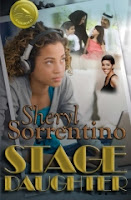
Stage Daughter by Sheryl Sorrentino (Self-Published, 2013, 358pp.)

Sonya Schoenberg, once an aspiring actress with big dreams, has now resigned herself to single motherhood. For the past twelve years, she has been a dedicated parent, doing her best to support her daughter’s creative side by enrolling her in San Francisco’s prestigious Oakland Regional Conservatory for the Arts.The problem? Sonya thinks Razia should be a drama student; Razia would rather be an artist. But what are offspring for, if not to fulfill their parents’ failed dreams? The other problem? Razia wants to meet her biological father. Not going to happen, as far as Sonya is concerned. But Razia is determined. She discovers that her father is none other than Aziz Qureshi, a celebrated Kawaiti-born yoga instructor who’s married with two children—and completely unaware of her existence. To her anger, Sonya forbids her from having anything to do with him. Bitter drama ensues as Aziz fights Sonya for the right to be in his new-found daughter’s life. While I enjoyed the story, I felt that at 358 pages, the novel runs a little overlong because of its limited range of action. Sonya’s role in the story is somewhat limited by her repetitive behavior (insulting Aziz, blaming other people for her problems, etc.), which has the potential to affect the pacing. Regardless of this, however, it’s overall an engaging story worth reading at least once. I would definitely be interested in reading more of this author’s work.

Wednesday, August 28, 2013

Underwhelming


Joyland by Stephen King (Hard Case Crime, 2013, 288pp.)

Joyland takes place in 1973 against the backdrop of a haunted amusement park, and chronicles Devon Jones’s experiences working there during college. The story is comprised of several subplots: the legend of the girl murdered on the haunted house ride, Devon’s friendship with a single mother whose young son is dying from muscular dystrophy, Devon’s heartache over a breakup with his first girlfriend, and the bonds of comradery he forms with his fellow carny workers.

Maybe my expectations were set too high because—I don’t know, because King is supposed to be a master writer? In any case, as a Stephen King fan, I was pretty disappointed. While Joyland is more or less passable as a piece of fiction, it lacks the drama, tension, and psychological insight found in many of King’s earlier works. The creep factor is relatively low for a ghost story, and the characters felt underdeveloped and uninteresting. If you haven’t read King’s works before, don’t start here. Try The Shining or ’Salem’s Lot first.

Monday, July 1, 2013

Disappointing, With Some Good Elements


Mercy Row: A Philadelphia Story by Harry Hallman (BookBaby, 2013, 176pp.)

Mercy Row is a dark, gritty story set in Depression-era Philadelphia. Focusing on the bloody battles waged between the powerful Byrne family of North Philly and the Italian mafia of South Philly, Hallman’s novella is not for the faint of heart. Its opening scene is one example why: Franklin Garrett, the building supervisor for Byrne Construction, is seen rescuing his boss’s teenage son, Jacob, from the lascivious clutches of another inmate in the holding tank of a jail. While this happens to be the story’s only scene of attempted sexual assault, there’s still plenty of blood and flying bullets, and the body count is rather high. Aside from the gore, though, the first half of the story is actually quite engaging. Out of Garrett’s act of kindness, a partnership is formed between himself and the boss’s ambitious heir apparent. The two get their own gang together to eliminate the Italian competition from Philadelphia and build a new empire. While the two aren’t the most well-rounded of characters, they are still sympathetic enough to make you care about what happens to them. Unfortunately, when the story hits the halfway mark, things start to go downhill. Even though ten years have passed since the first half of the novella, the author glosses over this entire period by simply summarizing events for us in a few paragraphs. The pacing starts to lag, and the author steers the story towards ground already covered by Puzo’s The Godfather. 

Ultimately, Mercy Row will disappoint some readers. Although the story has sympathetic characters doing interesting things, much of the material remains underdeveloped, and makes the story feel more like a rough draft than a finished product.

Wednesday, June 26, 2013

Light and Humorous


Peter in Flight by Paul Michael Peters (Self-Published, 2013, 112pp.)

Peter doesn’t have family, nor does he own a car or a house. That’s because he works for Comp-U-Soft in the marketing department. A self-named “ambassador of software,”  Peter travels all over the country attending trade shows and hawking his company’s product. At every conference, he meets hundreds of people all across the country, all with stories to tell. The main story that dominates the novella, of course, is Peter’s own. It documents Peter’s career pre- and post-9/11, as well as the unrequited love he feels for his married employer, Tatiana. Although it takes a couple of chapters to really get into the story, Peter in Flight is mostly light and relatively humorous. At 112 pages, it’s just the right length for someone looking for something light and quick to read.

Thursday, June 20, 2013

An Interesting Twist On the Modern Health Care Crisis


Angel on the Ropes by Jill Schultz (Self-Published, 2013, 287pp.)

Angel on the Ropes takes place on Penance, a space colony orbiting Earth, and focuses on the trials and tribulations of Amandine Sand. She’s a brilliant trapeze artist who’s been with the Cristallo Circus for seventeen years. Unfortunately, she’s also a leopard, which means she was born with spot-like birthmarks all over her body—a condition that many incorrectly associate with the spread of the dreaded plaguepox virus. Although the Cristallo Circus has secretly provided a haven for its leopard performers for years, Amandine still finds herself covering up her spots with makeup whenever she goes out in public. The main opponents of leopards are the hostile Plaguellants, a futuristic kind of Ku Klux Klan obsessed with genetic “purity,” as well as the eradication of all germs and plaguepox. Opposing the Plaguellants are the Spots, militant leopards that fight back against these futuristic germaphobes, but all too often end up causing just as much mayhem as their enemies. Amandine herself is with the Seekers, an organization which embraces pacifism and tries to find a healthy medium between these two extremes. Although she is devoted to the circus, she finds herself devoting more and more time to the Seekers as political tensions rise and violence threatens to erupt throughout the entire colony.

Like all good science fiction, this story is big on ideas. I absolutely loved the idea of the colony’s health care system, which relies solely on “health casinos” to provide people with medical insurance. (If you lose too many times at the casino games, you become an indentured servant to the system!) The characters, while believable and sympathetic, could have been more developed. However, I do understand that when writing science fiction, it’s better to develop fresh, new ideas rather than focus on characters (this is one of the few times you will ever see me defending the importance of plot over characters). A interesting twist on the modern health care crisis, I’d recommend Angel on the Ropes to any lover of classical science fiction.

Click on cover for image source.

Tuesday, May 21, 2013

Kudos to Picoult For Writing Her First (Mostly) Non-Biased Novel Since My Sister's Keeper!


The Storyteller by Jodi Picoult (Atria, 2013, 480pp.)
“It was a strange idea, that what happened to me isn’t my tale to tell, but something completely separate from me. I wonder if this had been my problem all along: not being able to dissect the two.”
Sage, a young non-practicing Jewish woman, has lived an intensely private life after a car accident left her with a scarred face. It wouldn’t be an exaggeration to say that she really has no life. She works at a friend’s bakery, preferring to work the lonely overnight shift baking the store’s wares rather than interact with the public. Her relationships are limited to Mary, her former-nun-turned-baker friend, Minka, her beloved Holocaust-survivor grandmother, and Adam, a married mortician with whom she is having an affair.

Then she meets Josef, an elderly German immigrant who makes regular visits to Mary’s bakery during the daytime. Despite his foreign origins, he’s been part of the community for years, working as a trusted high school teacher and baseball coach. At first glance, he seems to be just a lonely widower eager to make friends in his old age. Imagine her shock when, shortly afterward, he reveals that he really has ulterior motives in pursuing their friendship. Decades ago, he was an SS officer during the Holocaust (an overseer for the women’s camp at Auschwitz, no less). This confession, in turn, leads to his two-fold motive in gaining her trust. Because she is ethnically Jewish, she will be able to fulfill his last two end-of-life goals: one, that a Jew receive his confession and forgive him for his crimes, and two, that this same person take his life in compensation for the millions lost. Naturally, she’s a bit apprehensive in agreeing to his proposition. When he senses her hesitation, he asks her to keep their deal secret so that he will not be apprehended by the legal system, and therefore be cheated out of his self-styled chance for redemption. Through multiple first-person viewpoints, Sage, her grandmother, Minka, Josef, and various other characters take turns serving as the titular storyteller to unfurl the remainder of a narrative that takes place over sixty years ago.

Most of Jodi Picoult’s books are centered around controversial issues: assisted suicide (Mercy), same-sex marriage (Sing You Home), the death penalty (Change of Heart), etc. Most of her novels are deeply tainted by the author’s own political bias. With The Storyteller, I would like to give my kudos to Ms. Picoult, who has, for the first time since My Sister’s Keeper, decided to focus on the human story and not solely on the issue itself. 

This doesn’t mean the book is free of flaws, however. As I said, Sage, Minka, and Josef take turns narrating (with one or two other characters). Up until we get to Minka’s narrative, which describes the brutal decimation of Poland’s Jewish population—and, for that matter, Josef’s narrative, which describes his experiences as a Hitler Youth—the story remains focused on Sage the scarred, bread-baking adulteress. In addition to this, the book has its obligatory Picoultian formulas that honestly made me roll my eyes: the foremost of which are the love interest and, of course, what Picoult novel isn’t complete without the “twist” that the author’s fans can see coming a mile away?

So. Thinking about the book as a whole, it’s definitely worth a read. Thinking about it compared to other books, however, I really have to be honest: like some books leave a bad taste in your mouth, this one left that “Jodi Picoult” taste in mine. All her books have the same flavors and flaws in varying degrees. So, while in the universe of Jodi Picoult, this book manages to be one of her better ones. But compared to other fictional works on the Holocaust? It’s about middling—no more, no less.

Click on cover for image source.

Tuesday, May 7, 2013

Recommended For Those Who Like Slow, Unconventional Literature


The Mapmaker’s War: A Legend by Ronlyn Domingue (Atria, 2013, 226pp.)

This short novel deals with the interactions between two unnamed kingdoms. One is patriarchal and greatly reminiscent of medieval Europe, while the other is peace-loving and unconventional, a veritable utopia. Aoife (pronounced ee-fah), the novel’s heroine, hails from the patriarchal society. She is a woman whose skills as a mapmaker have graced her family with political favors. During one mapmaking expedition, she is ordered to document the land close to the border between the two kingdoms. Upon her return to her homeland, she reports her findings: the friendly, peace-loving tribe of people, the wealth, the streets paved with gold, the abundant jewels. Aoife’s husband, who has recently been crowned king, is convinced by his greedy advisors to declare war on the utopia. When her pleas that the utopia be spared fall on deaf ears, she secretly travels to warn her new friends—but too late. As punishment for her actions, her husband’s supporters force her into exile. She takes up residence with a group of utopians that remains untouched by outside influence and is allowed to start a new life for herself, despite her unwitting betrayal. What follows next is a chronicle of her life in this peace-ridden society, her second marriage, the birth of a daughter with special skills, and her eventual coming to terms with her exile.

The premise of The Mapmaker’s War is not new: A person from a warlike society is confronted by a strange, peaceful people and questions the values he/she was brought up with. While the novel itself is, for the most part, an unconventional tale (a good thing), it also has the tendency to be slow and unengaging. The narrator, Aoife, is telling herself her own life story, so the narrator is referred to as “you.” (Not the most popular choice of narration in fiction, to be sure.) Even though the plot centers more on Aoife’s life story than the titular war itself, we learn very little about her. And to be honest? What we do know about her isn’t really all that interesting.

Looking at the mostly positive reviews on Amazon, I’m sorry to say that this book just didn’t sit very well with me at all. The plot inches forward at a snail’s pace, and by the midway point of the book, I resorted to skimming. It also doesn’t help that the author chose to grace her heroine with a name that consists almost entirely of vowels. Recommended for the reader who doesn’t mind slow-moving, unconventional literature.

Click on cover for image source.

Tuesday, April 23, 2013

An Enjoyable Jaunt With A Real Downer Of An Ending


The Boy by Lara Santoro (Little, Brown, and Co., 2013, 192pp.)
“She had the right to life, to an identity separate from that of her child. She had a right.”
A harrowing mother-daughter story, Lara Santoro’s short novel focuses on the distraught domestic life of Anna, a middle-aged single mom raising her young daughter in New Mexico. Once free to roam as she pleased, Anna is now stranded in midwestern Suburbia amidst pot-smoking nannies and hostile helicopter parents. Then the neighbor’s oldest son catches her eye. A mere youth of 20, Jack Strand is a shaggy college dropout—one that’s been watching her every move. Although she initially avoids her physical attraction to him, she inevitably succumbs to it. Sure, it’s a nice break in the monotonous drone of soccer practice and grocery shopping—but how will such an unhealthy relationship affect other aspects of her life? Most importantly, her relationship with her daughter?

This isn’t a romance by any means. Or, if it is, it’s an incredibly self-destructive one that the reader can tell is doomed from the start. Santoro’s prose is sparse and reminiscent of Annie Proulx, yet still manages to effuse enough humanity to affect the reader. I felt emotionally invested in Anna’s plight, even as her likability unravels as the story moves into its final moments. Occasionally humorous, and frequently moving, it’s an enjoyable jaunt into one woman’s psychology, albeit one with a real downer of an ending.

Click on cover for image source.

Tuesday, April 2, 2013

An Enjoyable, Chuckle-Worthy Read


Fangs Out (Cordell Logan #2) by David Freed (Permanent Press, 2013, 270pp.)
“There’s an expression among fighter jocks...the adrenaline-fueled determination to close with the enemy and destroy him. They call it, Fangs out.’ ” (136)
This second installment in the Cordell Logan series begins with the death by lethal injection of Dorian Munz, convicted of killing his ex-girlfriend, Ruth Walker, a decade earlier. Before his execution, however, Munz uses his final minutes to accuse technical giant Greg Castle, not only of committing the murder he’s about to die for, but also of stealing money from the government. Months later, the accusations have taken their toll on Castle Robotics: stocks have plummeted, and relations with the Pentagon, which frequently contracts the company for their work in nano technology, are in danger of souring. Hub Walker, Ruth’s father and Castle’s friend, asks former black ops agent-turned-Buddhist flight instructor Cordell Logan to put matters to rest on Castle’s behalf. Logan’s smart-ass commentary and shrewd detective work on the case make this sequel to Flat Spin an enjoyable, chuckle-worthy read.

Click on cover for image source.
Not So Much A Mystery As A Hackneyed Thriller

Three Graves Full by Jamie Mason (Gallery Books, 2013, 320pp.)

It’s a mistake anyone could make, really. Under extreme stress, anyone can be driven to kill. Take Jason Getty, for instance. He’s your average, law-abiding citizen who pays his taxes on time,  voluntarily picks up litter from the side of the road, and helps out perfect strangers. Overall, he’s an OK guy, if not a bit of a push-over. Okay, more than a bit of a pushover, he’s the textbook definition of a human doormat. But Jason also has a secret: there’s a body buried in his backyard. Just the one, mind you. In a fit of rage, he was once driven to kill a man who was tormenting him. After the grisly task of burying the body behind his house, Jason desperately seeks to return to a life of normalcy. He hires a landscaping company to work on his front garden, making sure that they stay far from the body-laden backyard, but imagine his surprise when the work crew unearth not one, but two dead, unidentified bodies!

I ventured into the novel thinking, for some reason, that it would be a murder mystery. Well, there is a murder. Several of them, in fact, and there is a mystery: who exactly buried those two bodies in the flowerbeds? The novel is split into two acts: Act the First sets up the action and introduces us to the three characters: Jason, whom we’ve already met; Leah, the hapless heroine and fiancee to one of the three bodies in Jason’s yard; and the man—who shall remain nameless—responsible for the decomposed state of the two unexplained bodies. The author reserves the second act, which takes up the last half of the novel, for a tedious merry-go-round chase between the three.

It’s an interesting thing to write about, the fact that anyone is capable for murder, given the  right circumstances, but—and this is a huge and unfortunate but—I found Jason’s predicament to be a bit of a stretch. Not the act of killing itself, mind you, but how he got to that point in the first place. In addition to this, the characters are only somewhat interesting. Three quarters of the way through, I realized this wasn’t a coincidence: it’s like a slasher movie with the hysterical heroine, and zero character development, and people who do stupid things just to further the plot.

Not so much a mystery as a hackneyed thriller, the cleverly titled Three Graves Full is almost like a knock-off Cohen Brothers movie, with its gore, quirky characters, and (somewhat) successful attempts at humor. Recommended only if you find yourself with some time to kill.

Click on Cover for Image Source.