Showing posts with label SELF-PUBLISHED and SMALL PRESS. Show all posts

Sunday, January 8, 2017

Twin-Bred


Twin-Bred (Twin-Bred, #1) by Karen A. Wyle (Oblique Angles Press, 2011, 359pp.)

As a young human girl growing up on planet Tofarn, Dr. Cadell saw the unrest that results from the inability of two species to successfully interact. As a young woman, she vowed to make it her life’s mission to bring the planet’s native species, called the Tofa, together with humans. The idea she proposes is radical: what if a select group of human and Tofa females agreed to carry twins—one of each species—to term? What if the resulting children were raised together, educated in the same school? With enough diplomatic training, these “Twinbred” just might bring about a lasting peace to the planet…

First of all, major points to Wyle for creating an alien species that is both completely believable, and completely inhuman. While many authors craft aliens that are simply humans with green skin and extra arms, Wyle manages to make the Tofa everything that humans are not: they have no system of writing, no creative impulse, and even perceive colors much differently than we do (the color blue, apparently, makes them drunk). With differences like these, no wonder the two species have trouble getting along! However, the cast of characters is quite large, and not everyone gets the fleshing out that they deserve. Therefore, I wouldn’t recommend it for lovers of character-driven fiction. But for devotees of Asimov, Heinlein, and other classical science fiction authors? Look no further!

Monday, May 5, 2014

Adventures of a Culinary Pirate Captain

Source: Goodreads
The Last Pirate at Fort Matanzas by Charles Frankhauser (Self-Published, 2013, 118pp.)

As he lies on his deathbed in the infirmary of a prison in St. Augustine, Madrid-born Alberto—a former pirate and restaurant owner—gives us his life story. Beginning with his humble origins as a gardener on a rich man’s garlic plantation, he was involuntary conscripted into Phillip II’s army. After being sent to serve as a cook aboard a merchant ship, he soon is taken hostage by pirates. Due to his ability to whip up a mean dish of Spanish rice, he is spared from walking the plank and is appointed cook. After the ship’s captain is killed, the crew picks Alberto as his successor, as he has been voted “the least likely person to get everyone killed.” The rest, as they say, is history. Comical, charming, irreverent, and highly recommended.

Friday, April 4, 2014

A Fool Among Fools

Source: Goodreads
A Fool Among Fools by John Terracuso (Self-Published, 2013, 375pp.)

Set in New York during the 1980s, A Fool Among Fools follows the trials and tribulations of the long-suffering Michael Gregoretti, an aspiring playwright who slaves away his days at an cut-throat ad agency writing commercials for therapeutic hand creams and aerosol butter. Although he tries to produce good, honest work for the agency’s clients, he often finds his ideas punted to the side or ridiculed. Worst of all, he just can’t seem to escape the influence of Gwen, his insane former supervisor who is determined to subject him to her will. Peopled with sympathetic characters, humor, and realism, readers will become completely (and uncomfortably) immersed in Michael’s claustrophobic work environment. Recommended for comedy lovers, and anyone who feels under-appreciated at work.

Thursday, March 13, 2014

Recommended for Fans of Gone Girl

Source: Goodreads
The Wronged Sons by John Marrs (Self-Published, 2013, 279pp.)

One day, Simon Nicholson, husband and father of three, disappears without a trace. His wife, Catherine, is left raising her children alone, wondering what could possibly have happened to him. Was he kidnapped? Murdered? Did he hit his head and lose his memories? Is he wandering around somewhere, not knowing who he is? The answer comes twenty-five years later when Simon suddenly appears on Catherine’s doorstep, alive and seemingly unharmed. The remainder of the narrative is told in alternating points of view from both Catherine and Simon, and gradually reveals exactly what happened on that fateful day in June.

Once you really get into the novel, it’s nearly impossible to put it down. On the downside, the novel has the tendency to be a little heavy-handed at times. It also takes a while getting to the big reveal, and while I admit that the story is right to take its time, I grew a bit impatient with the pacing towards the end, and ended up skimming the last 50 pages. Despite this, however, this is a definite recommendation for fans of Gone Girl.

Sunday, March 9, 2014

A Strong, Diverse Collection of Horror and Psychological Intrigue

Source: Author Website
The Carvings Collection: Ten Stories of Horror and Suspense by Drake Vaughn (Dead Orb Press, 2013, 220pp.)

A self-righteous vigilante determined to punish a man for a mercy killing. A giant flying cockroach that terrorizes and decapitates hapless high school stoners. A salesman who puts his marketing skills to the test when confronted by a cannibalistic rock star diva of Faustian proportions. A gang of bullies that run amok in a vampire brothel. All this, and more, can you find in Drake Vaughn’s new short story collection, The Carvings Collection. 

Sound varied? It is. It’s kind of like your little chocolate box o’ horrors: it simply runs the gamut when it comes to the genre. It opens with the nursery-time tale of terror, “Dolls,” and follows up with the high school slasher story, “Master Key.” Next, is a Hostel-like tale of revenge and captivity (“In the Chair”), a tale or two of black magic (“Carvings,” “Sales”), a cautionary tale for young people about trespassing (“The Garden”), a few surprising pieces of social commentary (“Driver’s Seat,” “The Test,” “Trip to V-Town,”), and last but not least, the parasite-ridden sci-fi creep-fest, “Flatheads.”

While I certainly savored some stories more than others, this is, overall, a strong, diverse collection of horror and psychological intrigue. I would recommend it for any fan of the horror genre, and for fans of Vaughn’s earlier novel, The Zombie Generation.

Wednesday, March 5, 2014

Snow White in Therapy

Source: Author Website
The Reflections of Queen Snow White by David Meredith (Self-Published, 2014, 155pp.)

Everyone has issues, even those who get fairy-tale endings! Just what would abuse survivor Snow White say on the psychiatrist’s couch? Here, we find out. Twenty-odd years after she rode off into the sunset with Prince Charming, Snow White is now a wise and respected queen in her gray-haired years. As the mother of a soon-to-be-married princess, she should be incredibly happy—but pesky emotional issues from the past plague her with unhappiness. Only with the help of a mysterious talking mirror found in the attic (you know the one!) can she begin to process the years of physical and emotional abuse she suffered at the hands of her stepmother. While the story covers a lot of well-trodden territory, it’s the magic-mirror-as-psychiatrist angle that gives this modern day rewrite an interesting twist. Overall, a nice story, somewhat simplistic, with a sweet ending.

Monday, February 10, 2014

Suicide Game

Source: Author Website
Suicide Game by Haidji (Self-Published, 2013, 358pp.)

In the distant future, a new, hit reality show is gripping TV audiences everywhere: Suicide Game! Eight thousand contestants gather in an arena and walk out onto a raised platform hundreds of feet in the air. They slip into harnesses, and then leap off into thin air. Some of these lifelines are rigged to break, while some of them aren’t. The unlucky ones plummet to their death. The lucky survivors then get to jump again, and again, until one contestant remains. What fun!


Sound like The Hunger Games? Yeah, it kinda is, except for a few differences. It isn’t young adult literature, for one. For another, it doesn’t focus on one main character, but rather a variety of contestants and game administrators to give us an idea of their motivations for wanting to participate in this gruesome spectacle. By (attempting) to examine these motivations, the story turns a critical eye on the ridiculous popularity of reality TV shows, and the “Me” generation.


I certainly don’t blame the author at all for wanting to exorcise her anxieties about modern times, and where we might be headed. That’s primarily what the science fiction genre is for. Unfortunately, like too many self-published works, Suicide Game isn’t not so much a novel as it is a vague pencil-shading of a concept. I never felt like I was quite immersed in the world, and I never really felt like the characters evolved into their own personages. While it’s certainly a good try, I can’t really recommend it as worthy literature at the present moment.

Thursday, December 19, 2013

For Philosophy Readers Only

Source: Author Website

Propinquity by John Macgregor (1986; CreateSpace, 2013, 366pp.)

Propinquity is a slow-burning contemporary novel that follows the life of the young, wayward Clive Lean, an Australian medical student who wends his way through existence before stumbling upon a conspiracy involving London’s Westminster Abbey, the religion of Gnosticism, and an 800-year-old cryogenically frozen saint.

Unbeknownst to most people, Berengaria of Navarre, wife of Richard the Lionheart, lies entombed beneath the Abbey in an underground chamber. As we later learn, she was something of a heretic and the disciple of an East Indian Gnostic, but her followers saw her as a sort of female Christ-figure. Yet, as the members of Monty Python are fond of saying, she’s not quite dead—just lying in a drug-induced coma (and there are members of the Holy Church that want to keep her that way). When Clive learns of the location of Berengaria’s body from his girlfriend, the daughter of Berengaria’s caretaker, he and his medical school buddies take on the challenge of trying to resurrect her.

Some have compared Propinquity to The Da Vinci Code, which was published some 17 odd years after Macgregor’s novel. Whereas The Da Vinci Code is all plot and little substance, Propinquity is mostly substance with a dash of plot thrown in—in other words, it’s a novel of ideas and philosophy. There is no real definitive action in the first third of the book. The novel simply coasts along, following various characters as they navigate the course of their offbeat lives, before introducing us to the defining plot element in Chapter 9. It was only after Clive announces his plans to resurrect Berengaria and attempts to put those plans into motion that the novel had my full and undivided attention. However, his plans turn out to be not as important as what Berengaria stands for (Gnosis) and its place as a theme in the story. As I was reading the book, I thought, “There really is too much background story before the interesting part.” But having finished the novel and considering its literary quality, perhaps it’s just the way it should be.

In the end, I’m not quite sure I’m the best person to review philosophical novels. Some parts just went right over my head, and I still couldn’t tell you what Gnosis is, even after reading a dumbed-down explanation of it on the Internet. The reader who will appreciate this novel will be someone who is interested in philosophy, is patient, thoughtful, and overall, open-minded. Propinquity is definitely an interesting read, but overall not recommended for consumers of mainstream/commercial fiction.

Wednesday, October 16, 2013

Informative but Disturbing


The Sarah Puzzle by Annie-Laurie Hunter (Self-Published, 2013, 358pp.)

A young girl is found living in an abandoned building slated for demolition. No one knows how old she is, or what her name is. She’s taken to the pediatric psych ward of a local hospital, where she refuses to speak. Gradually, though, under the staff’s nurturing care, she gives them a name (Sarah), and begins telling her story. The Sarah Puzzle traces her first year spent in therapy. Although it is very informative about what goes on with the therapy process in hospitals, it’s not a casual story for the sensitive or the faint of heart. We learn that Sarah spent her early years under the care of a child sex trafficking ring, and the story 
contains graphic descriptions of sexual abuse in children. Although the descriptions run the risk of being a little repetitive at times, it makes them no less shocking. Towards the end, the story gets even more intense as Sarah uncovers her most disturbing memories. A grueling journey for both the story’s characters and the reader that will leave neither unscathed.

Wednesday, October 9, 2013

The Baron of Death


The Baron of Death (Luna #1) by Soren Lauritzen (Athena, 2013, 269pp.)

This fantasy story takes place in the fictional country of Midgaard, a land that includes sorcery, giants, and dwarves. Luna is human, a thief living by her wits alone—well, that and some nifty enhanced abilities, thanks to the dark elf blood in her family. The titular Baron of Death refers to a mysterious drug-baron in the north who makes himself rich from the production of a dangerously addictive drug called orkiljin. Luna joins a quest to stem the flow of the drug in her city, and destroy the hold the Baron has on the north. Luna is a funny, entertaining narrator à la Anita Blake, and while Lauritzen doesn’t exactly reinvent fantasy with his novel, he does put the genre’s props to good use. Recommended for any fan of fantasy.

Monday, September 23, 2013

A Quirky Tale of Revenge and Ruin

Pickett’s Charge by Charles McNair (Livingston Press, 2013, 350pp.)

A fantastically quirky tale of revenge and ruin, Pickett’s Charge is set in Alabama during the Civil Rights Movement, and chronicles the efforts of 114-year-old Threadgill Pickett, the last surviving Confederate sympathizer, to seek out and murder the last surviving Union soldier—even if he has to escape from the nursing home to do it! As he sets out on his cross-country journey, he meets a cast of outrageous characters along the way. Although the story may be limited by its heavy use of local landmarks and city names that only Alabama residents would recognize, it’s still a finely layered psychological story.

See my author interview with Charles McNair, published in Weld for Birmingham, here.

Wednesday, September 11, 2013

Engaging, With Some Flaws

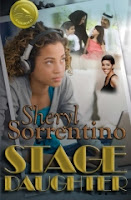
Stage Daughter by Sheryl Sorrentino (Self-Published, 2013, 358pp.)

Sonya Schoenberg, once an aspiring actress with big dreams, has now resigned herself to single motherhood. For the past twelve years, she has been a dedicated parent, doing her best to support her daughter’s creative side by enrolling her in San Francisco’s prestigious Oakland Regional Conservatory for the Arts.The problem? Sonya thinks Razia should be a drama student; Razia would rather be an artist. But what are offspring for, if not to fulfill their parents’ failed dreams? The other problem? Razia wants to meet her biological father. Not going to happen, as far as Sonya is concerned. But Razia is determined. She discovers that her father is none other than Aziz Qureshi, a celebrated Kawaiti-born yoga instructor who’s married with two children—and completely unaware of her existence. To her anger, Sonya forbids her from having anything to do with him. Bitter drama ensues as Aziz fights Sonya for the right to be in his new-found daughter’s life. While I enjoyed the story, I felt that at 358 pages, the novel runs a little overlong because of its limited range of action. Sonya’s role in the story is somewhat limited by her repetitive behavior (insulting Aziz, blaming other people for her problems, etc.), which has the potential to affect the pacing. Regardless of this, however, it’s overall an engaging story worth reading at least once. I would definitely be interested in reading more of this author’s work.

Wednesday, September 4, 2013

A Lovely, Inspirational Story


A Stop in the Park by Peggy Panagopoulos Strack (Self-Published, 2012, 372pp.)

Jamie and Michael Stolis have it all: a nice home in the thriving metropolis of Washington, D.C., two beautiful daughters, and all the material items they can afford—and yet, they couldn’t be more miserable. Michael, a lawyer, is always in a foul mood when he gets home, and feels unappreciated by his family. Jamie, a former news reporter-turned-stay-at-home mom, struggles to keep up with the kids and housework, and fears Michael’s nightly outbursts of temper. What starts out as mere discontentment builds up into outright misery. After a particularly vicious verbal battle, Michael and Jamie agree to a separation. Then, Michael meets an older gentleman playing blitz-chess in the park, and stops to challenge him to a game. What follows is a most unexpected friendship, and the wisdom and insight Michael gains from Rufus changes his outlook on life. Even better, Rufus’s advice just might save his marriage! A lovely, thought-provoking and inspirational story that examines how ordinary men and women are affected by today’s hyper-paced, technology-cluttered society.

Monday, July 8, 2013

Cheaper by the Half-Dozen


And the Whippoorwill Sang by Micki Peluso (Self-Published, 2012, 308pp.)
“...The whippoorwill had two songs, one happy, lilting song for spring, followed by a guttural tune of deep sadness as autumn approached and the bird was replaced by the winter wren.”
Much like the whippoorwill’s song, Peluso’s memoir conveys tales from a life that has known both joy and sorrow. It alternates between two timelines: in the first one, we sit with Peluso at her dying child’s bedside in 1981; in the second, we visit past memories and happier times. Starting in her late teens, Peluso recounts her married years with her high school sweetheart, Butch, as they move from one home to another, welcoming and raising six children along the way. Although times are frequently tough (and at times downright tragic), the tone of the work is mostly light-hearted. The reader will find themselves chuckling at the antics of Peluso’s kids, as well as her domestic misadventures involving disobedient dogs, a house plagued by paranormal activity, and cross-country road-trips taken with her family of eight. The story comes full circle when Peluso reveals the tragedy that marks the memoir’s beginning. By turns saddening and laugh-out-loud funny, And the Whippoorwill Sang is definitely one to check out.

Monday, July 1, 2013

Disappointing, With Some Good Elements


Mercy Row: A Philadelphia Story by Harry Hallman (BookBaby, 2013, 176pp.)

Mercy Row is a dark, gritty story set in Depression-era Philadelphia. Focusing on the bloody battles waged between the powerful Byrne family of North Philly and the Italian mafia of South Philly, Hallman’s novella is not for the faint of heart. Its opening scene is one example why: Franklin Garrett, the building supervisor for Byrne Construction, is seen rescuing his boss’s teenage son, Jacob, from the lascivious clutches of another inmate in the holding tank of a jail. While this happens to be the story’s only scene of attempted sexual assault, there’s still plenty of blood and flying bullets, and the body count is rather high. Aside from the gore, though, the first half of the story is actually quite engaging. Out of Garrett’s act of kindness, a partnership is formed between himself and the boss’s ambitious heir apparent. The two get their own gang together to eliminate the Italian competition from Philadelphia and build a new empire. While the two aren’t the most well-rounded of characters, they are still sympathetic enough to make you care about what happens to them. Unfortunately, when the story hits the halfway mark, things start to go downhill. Even though ten years have passed since the first half of the novella, the author glosses over this entire period by simply summarizing events for us in a few paragraphs. The pacing starts to lag, and the author steers the story towards ground already covered by Puzo’s The Godfather. 

Ultimately, Mercy Row will disappoint some readers. Although the story has sympathetic characters doing interesting things, much of the material remains underdeveloped, and makes the story feel more like a rough draft than a finished product.

Wednesday, June 26, 2013

Light and Humorous


Peter in Flight by Paul Michael Peters (Self-Published, 2013, 112pp.)

Peter doesn’t have family, nor does he own a car or a house. That’s because he works for Comp-U-Soft in the marketing department. A self-named “ambassador of software,”  Peter travels all over the country attending trade shows and hawking his company’s product. At every conference, he meets hundreds of people all across the country, all with stories to tell. The main story that dominates the novella, of course, is Peter’s own. It documents Peter’s career pre- and post-9/11, as well as the unrequited love he feels for his married employer, Tatiana. Although it takes a couple of chapters to really get into the story, Peter in Flight is mostly light and relatively humorous. At 112 pages, it’s just the right length for someone looking for something light and quick to read.

Thursday, June 20, 2013

An Interesting Twist On the Modern Health Care Crisis


Angel on the Ropes by Jill Schultz (Self-Published, 2013, 287pp.)

Angel on the Ropes takes place on Penance, a space colony orbiting Earth, and focuses on the trials and tribulations of Amandine Sand. She’s a brilliant trapeze artist who’s been with the Cristallo Circus for seventeen years. Unfortunately, she’s also a leopard, which means she was born with spot-like birthmarks all over her body—a condition that many incorrectly associate with the spread of the dreaded plaguepox virus. Although the Cristallo Circus has secretly provided a haven for its leopard performers for years, Amandine still finds herself covering up her spots with makeup whenever she goes out in public. The main opponents of leopards are the hostile Plaguellants, a futuristic kind of Ku Klux Klan obsessed with genetic “purity,” as well as the eradication of all germs and plaguepox. Opposing the Plaguellants are the Spots, militant leopards that fight back against these futuristic germaphobes, but all too often end up causing just as much mayhem as their enemies. Amandine herself is with the Seekers, an organization which embraces pacifism and tries to find a healthy medium between these two extremes. Although she is devoted to the circus, she finds herself devoting more and more time to the Seekers as political tensions rise and violence threatens to erupt throughout the entire colony.

Like all good science fiction, this story is big on ideas. I absolutely loved the idea of the colony’s health care system, which relies solely on “health casinos” to provide people with medical insurance. (If you lose too many times at the casino games, you become an indentured servant to the system!) The characters, while believable and sympathetic, could have been more developed. However, I do understand that when writing science fiction, it’s better to develop fresh, new ideas rather than focus on characters (this is one of the few times you will ever see me defending the importance of plot over characters). A interesting twist on the modern health care crisis, I’d recommend Angel on the Ropes to any lover of classical science fiction.

Click on cover for image source.

Saturday, June 15, 2013

Lovely Bedtime Stories For Adults


Allister Cromley’s Fairweather Belle (Bedtime Stories For Grownups to Tell) by Shane Portman (Self-Published, 2012, 76pp.)

For those of you who are looking for something to lull you to sleep at bedtime—something a little softer than that white-knuckle thriller you probably have on your nightstand—might I suggest Shane Portman’s Allister Cromley’s Fairweather Belle. Reminiscent of Antoine de Saint-Exupéry’s The Little Prince, this gentle, nonsensical little collection of vignettes follow the allegorical adventures of Allister Cromley, a man who lives in a world that is “at once ours and at once only his” (26). Who is Allister, you ask? He’s a man prone to “subtle anarchy,” someone who writes “Go!” at the bottom of stop signs and who doesn’t follow rules—at least, until he realizes that “following no rules in itself [becomes], by definition, a rule” (40). While it can stand perfectly well on its own, I think the book works best as a complement to its companion website, http://www.fairweatherbelle.com/. Also see the Allister Cromley blog (http://allistercromley.blogspot.com/), a kooky, quirky source of extra Allister stories, with links to some really weird (but really cool) websites.

Sunday, September 2, 2012

The Return


The Return by Carter Vance (Self-Published, 2010, 293pp.)

While vacationing at his friend’s chateau in France, Geoff, an American banker, discovers an ancient library belonging to the Knights Templar, an organization that is supposed to have disbanded years ago. Out of curiosity, he decides to learn more about the Templars, and learns that their society is actually still active. Meanwhile, Maria Davidson-Morales makes a deathbed confession to her only child, Sarah: the Davidson-Morales family is descended from Jesus Christ Himself. The family has produced only girls for generations, but legend has it that one day, the line will finally yield a male child that will signal His second return.

The Return traces much of the legend that was covered in Dan Brown’s The Da Vinci Code, a controversial bestseller that employed the premise that Mary Magdalene was not a prostitute, but the wife of Jesus Christ and mother of his child. It further explores the idea by introducing other historical elements, such as the Ark of the Covenant.

Unfortunately, The Return just doesn’t work as a novel. The plot is rushed from beginning to end, compressing 500 or 600 pages worth of material into just under 300: holy artifacts are tracked down and Satan’s legions line up to prevent the second birth of Christ. Characters are stunted by time constraints and never really manage to come to life. The reader is allowed to catch brief glimpses of interesting things, but the story never slows down to focus on any of it. So while it has an interesting storyline, The Return still needs a lot of work.

Similar Books:
  • The Da Vinci Code by Dan Brown

Saturday, August 11, 2012

Excellent Thriller with Character Development

What Happened in Granite Creek cover
What Happened in Granite Creek by Robyn Bradley (CreateSpace, 2011, 362pp.)

A quadruple amputee war veteran; a battered woman, her mean-spirited husband, and the three daughters they are devoted to: these are the players at the heart of this savage, compelling drama. What makes this thriller special? It focuses on what many of its genre skip out on: character development.

The story begins when Jamie, a 26-year-old veteran, returns home from a tour in Iraq to Granite Creek, New Hampshire, minus his arms and legs. Because his schoolteacher mother can’t always be home to care for him, the neighbors take turns “visiting” with Jamie for a few hours at a time—though they are quickly driven away by his rage and bitterness. But Koty Fowler, a bullied mother of three, is able to connect with him in ways that the others cannot. What begins as friendship soon turns into something more, leading to a tragic whirlwind of events that leaves no one’s lives untouched. At the novel’s conclusion, the reader is left to question: who exactly is to blame for what happened in Granite Creek? An excellent thriller, highly recommended.

Click on cover for image source.