Showing posts with label FICTION/LITERATURE. Show all posts

Sunday, October 1, 2017

A Proper Young Lady


A Proper Young Lady by Lianne Simon (Faie Miss Press, 2015, 227pp.)

This story tells the romantic tale of two childhood sweethearts, the tomboyish Melanie, and her graceful, intersex lover, Danièle. (Danièle looks feminine, but produces sperm, and has no uterus to bear children herself.) Separated as teenagers, the two are reunited five years later when Danièle, now engaged to the ambitious Ethan, looks for a woman to serve as the surrogate mother for their children. After Melanie agrees to the role of surrogate, she conceives twins using in vitro. Little does she or Ethan know, however, that the sperm sample used to fertilize her eggs is not Ethan’s, but Danièle’s! When Ethan realizes the truth, he demands that the children be put up for adoption. Now, the same societal rules that originally tore Danièle and Melanie apart—rules that say people should be either male or female—threaten to rise again and compromise their happiness.

In addition to telling a very simple romance story, A Proper Young Lady also serves as a protest against the societal expectation that people classify themselves on a strict male/female basis. While the premise itself is interesting enough to drive the novel forward to a sweet, uplifting conclusion, the writing was neither rich nor compelling, which proved to be a disappointment. Readers looking for stories outside the mainstream, however, may find themselves interested. Since A Proper Young Lady belongs to the New Adult genre (meaning readers who are college-aged and a little older), I recommend it for readers ages 18 and up.

Saturday, July 9, 2016

A Slow-Moving, Bleak Tragicomedy


On the Shores of Darkness, There is Light by Cordelia Strube (ECW Press, 2016, 372pp.)

Life hasn’t been fair to 11-year-old Harriet. The adults in her life are too consumed by their own thwarted desires to pay attention to her needs, and her hydrocephalic little brother, Irwin, faces a life of pain. Just as unbearable is her mother’s insistence in dating the awful Gennedy, a man convinced that Harriet is trying to kill her brother—which might be true, but when everything she’s faced in her too-short existence has convinced her that a life of pain is not worth living, how could she not try to free the brother she loves? The story, divided into two parts, first covers Harriet’s unhappy living situation, and then follows her brother years after a devastating family tragedy. On the Shores is a book that is as hard to read as it is to review. If I had to cover my opinion of it in a single sentence, I’d call it an incredibly bleak, though sometimes redemptive, tragicomedy. While some parts of it are very touching and almost subtly quirky, some readers will be unable to see past its slow-moving pace and depressing content. Readers who encounter this unusual novel will either treasure its discovery, or discard it before they even reach the story’s half-way point.

Friday, February 12, 2016

Poetic and Grotesque


Source: Publisher Website
The Vegetarian by Han Kang (2007; Hogarth, 2016, 192pp.)

Mr. Cheong finds his mild-mannered existence interrupted when his wife, Yeong-hye, wakes up from a horrifying nightmare where she is surrounded by meat—bloody, dripping meat. The dream so disturbs her, she declares that she will henceforth live as a staunch vegan. Her family, who see vegetarianism as an unnatural act of social deviancy, is shocked and upset. Her artist brother-in-law, however, sees her as the key to completing his next masterpiece—an act that could destroy his peaceful marriage.

Ponderous, poetic, and grotesque, The Vegetarian is a short novel that flowers into a kind of intellectual horror story over the course of just 192 pages. Being psychological fiction, it may prove boring to lovers of slasher stories, however those who like their books slow and surreal will find it to be a literary treat. Just don’t read it while you’re eating.

Monday, July 20, 2015

“Honest Writing” May Repulse Readers from Otherwise Interesting Novel

Source: Publisher Website
The Slap by Christos Tsiolkas (2008; Penguin, 2015, 496pp.)

At a backyard BBQ in Australia, a group of long-time friends is shocked when Harry, cousin to the BBQ’s host, slaps the spoiled, misbehaving child of Earth mother Rosie. There are different reactions to this event: most of the women are distraught and horrified, while the men (and one woman) secretly applaud Harry for his “take-charge” attitude. Narrated in turn by different witnesses, Tsiolkas’s novel documents the consequences of the slap, and the social rifts that form because of it.

The Slap is an interesting work to say the least, delving into the peculiarities of inter-family dynamics, the less flattering aspects of cohabitation, and the distressing, though inevitable, fact that all relationships, whether they be marital or platonic, change with the passage of time. That said, some readers may find it hard to get past the first few chapters, due to the plethora of bodily functions described, like farting, urinating, and breast-feeding. While many reviewers (myself included) have found themselves disgusted by such excess description, one Goodreads reviewer defended the novel on grounds that the author isn’t focused so much on shock value, as he is on writing about life honestly. It’s an assessment that I ultimately find myself agreeing with—though it’s a shame that such “honest writing” has the tendency to backfire, and turn many readers away from what proves to be an otherwise interesting examination of human interaction.

Monday, November 10, 2014

We Need to Talk About Why Kids Aren't For Everyone

Source: Publisher Website
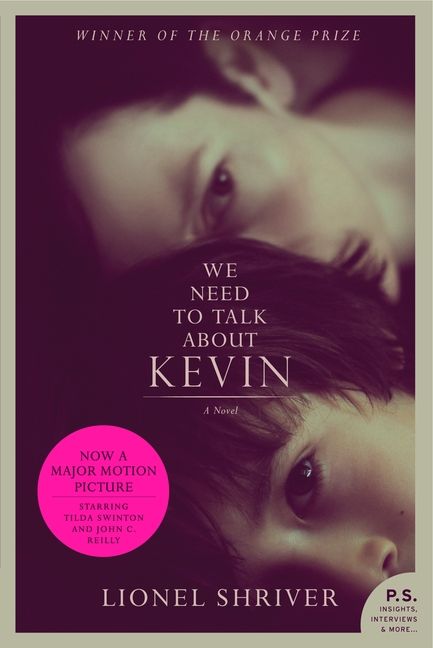
We Need to Talk About Kevin by Lionel Shriver (2003; Harper Perennial, 2011, 432pp.)

Many people pursue parenthood for all the wrong reasons. Some have kids to keep a marriage together. Others just want to feel loved. For Eva Khatchadourian, the reasons are a little more complex. At 37, she is happily married, childless, and the CEO of a company that pens bestselling travel guides. Although she enjoys her freedom immensely, she begins to worry about what she'll miss by foregoing parenthood. Years from now, will she still be telling the same tired stories about her travels, while her friends will have graduated to more mature matters of college costs and grandchildren? Most of all, though, she wants what society promises, that motherhood will leave her feeling happy, fulfilled, and give her insight into the existential crisis of modern man. (In the novel, she thinks of having a child as gaining an answer to the "Big Question.")


As it turns out, the experience of childbirth reveals nothing to her. She ends up loathing parenthood, and her son, Kevin, grows into a truly terrible human being. Although he acts the part of daddy's boy to his doting, clueless father, he gleefully torments his begrieved mother and neighbors with disturbing pranks. Then, without warning, Kevin decides to up the ante by murdering seven high school classmates and two school staff members. As the entire country reels in the aftermath of the incident, the reader is left with the timely question: Who is to blame?

This novel is, all at once, a cautionary tale against having children for inane reasons (or for any reason), and a caustic commentary on modern American society. What Shriver might be suggesting in her novel can be summarized as follows: in the modern-day First World, the well to-do no longer have to worry about trivial things like starving to death, or dying from preventable disease. With these threats eliminated, we automatically search for something else to be miserable about. If all that Shriver lays out is true, then, this plethora of mass-murders caused by young people are merely the "Me" generation's way of lashing out at the same existential crisis that plagues Eva.

So, pros and cons: it's a fascinating book in terms of ideas, but the novel's wordiness and heavy-handed approach often comes at the expense of character development. Whether or not you'll enjoy this book also depends on who you are, and what you're looking for at the time. If you are, in general, an optimistic person just looking for something happy to read, then avoid at all costs. The story's misanthropic tone will grate on your nerves, and force you to give up long before the end. If, on the other hand, you're looking for an uncomfortable, angry book to validate your discontent of the status quo, or you're just wondering why kids now-days are more likely to reach for a semi-automatic than attend a well-organized sit-in, then it's definitely recommended.

Friday, April 4, 2014

A Fool Among Fools

Source: Goodreads
A Fool Among Fools by John Terracuso (Self-Published, 2013, 375pp.)

Set in New York during the 1980s, A Fool Among Fools follows the trials and tribulations of the long-suffering Michael Gregoretti, an aspiring playwright who slaves away his days at an cut-throat ad agency writing commercials for therapeutic hand creams and aerosol butter. Although he tries to produce good, honest work for the agency’s clients, he often finds his ideas punted to the side or ridiculed. Worst of all, he just can’t seem to escape the influence of Gwen, his insane former supervisor who is determined to subject him to her will. Peopled with sympathetic characters, humor, and realism, readers will become completely (and uncomfortably) immersed in Michael’s claustrophobic work environment. Recommended for comedy lovers, and anyone who feels under-appreciated at work.

Monday, March 17, 2014

Entertaining But Shallow


Source: Goodreads
Lives of the Circus Animals by Christopher Bram (Harper Perennial, 2004, 352pp.)

This post-9/11 novel chronicles the madcap struggles of a small group of New Yorkers trying to “make it” in the Big Apple. Here’s a few of the “animals” that will be found in this particular circus: Caleb, a gay playwright who’s nursing a major writer’s block; Henry, a British actor who’s so talented, he can’t take care of himself; Jessie, his long-suffering personal assistant; Frank, a former actor who spends his life on the outside looking in; and Kenneth, a theater critic from the mighty New York Times who just really wants to be liked.


Lives of the Circus Animals is an entertaining, occasionally chuckle-worthy rom-com that’s as shallow as its main characters’ personalities. Over the course of the novel, the characters fight, make love, act out, and obsess over each other, while the outside world around them passes them by. If you’re looking for a light read that teaches you about the world of theater in New York, then this is an excellent book to read. If you’re looking for something deep and ponderous that examines the soul of humanity, you probably won’t find it here.

Wednesday, March 5, 2014

Snow White in Therapy

Source: Author Website
The Reflections of Queen Snow White by David Meredith (Self-Published, 2014, 155pp.)

Everyone has issues, even those who get fairy-tale endings! Just what would abuse survivor Snow White say on the psychiatrist’s couch? Here, we find out. Twenty-odd years after she rode off into the sunset with Prince Charming, Snow White is now a wise and respected queen in her gray-haired years. As the mother of a soon-to-be-married princess, she should be incredibly happy—but pesky emotional issues from the past plague her with unhappiness. Only with the help of a mysterious talking mirror found in the attic (you know the one!) can she begin to process the years of physical and emotional abuse she suffered at the hands of her stepmother. While the story covers a lot of well-trodden territory, it’s the magic-mirror-as-psychiatrist angle that gives this modern day rewrite an interesting twist. Overall, a nice story, somewhat simplistic, with a sweet ending.

Thursday, December 19, 2013

For Philosophy Readers Only

Source: Author Website

Propinquity by John Macgregor (1986; CreateSpace, 2013, 366pp.)

Propinquity is a slow-burning contemporary novel that follows the life of the young, wayward Clive Lean, an Australian medical student who wends his way through existence before stumbling upon a conspiracy involving London’s Westminster Abbey, the religion of Gnosticism, and an 800-year-old cryogenically frozen saint.

Unbeknownst to most people, Berengaria of Navarre, wife of Richard the Lionheart, lies entombed beneath the Abbey in an underground chamber. As we later learn, she was something of a heretic and the disciple of an East Indian Gnostic, but her followers saw her as a sort of female Christ-figure. Yet, as the members of Monty Python are fond of saying, she’s not quite dead—just lying in a drug-induced coma (and there are members of the Holy Church that want to keep her that way). When Clive learns of the location of Berengaria’s body from his girlfriend, the daughter of Berengaria’s caretaker, he and his medical school buddies take on the challenge of trying to resurrect her.

Some have compared Propinquity to The Da Vinci Code, which was published some 17 odd years after Macgregor’s novel. Whereas The Da Vinci Code is all plot and little substance, Propinquity is mostly substance with a dash of plot thrown in—in other words, it’s a novel of ideas and philosophy. There is no real definitive action in the first third of the book. The novel simply coasts along, following various characters as they navigate the course of their offbeat lives, before introducing us to the defining plot element in Chapter 9. It was only after Clive announces his plans to resurrect Berengaria and attempts to put those plans into motion that the novel had my full and undivided attention. However, his plans turn out to be not as important as what Berengaria stands for (Gnosis) and its place as a theme in the story. As I was reading the book, I thought, “There really is too much background story before the interesting part.” But having finished the novel and considering its literary quality, perhaps it’s just the way it should be.

In the end, I’m not quite sure I’m the best person to review philosophical novels. Some parts just went right over my head, and I still couldn’t tell you what Gnosis is, even after reading a dumbed-down explanation of it on the Internet. The reader who will appreciate this novel will be someone who is interested in philosophy, is patient, thoughtful, and overall, open-minded. Propinquity is definitely an interesting read, but overall not recommended for consumers of mainstream/commercial fiction.

Wednesday, September 11, 2013

Engaging, With Some Flaws

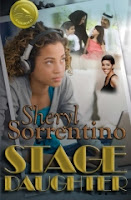
Stage Daughter by Sheryl Sorrentino (Self-Published, 2013, 358pp.)

Sonya Schoenberg, once an aspiring actress with big dreams, has now resigned herself to single motherhood. For the past twelve years, she has been a dedicated parent, doing her best to support her daughter’s creative side by enrolling her in San Francisco’s prestigious Oakland Regional Conservatory for the Arts.The problem? Sonya thinks Razia should be a drama student; Razia would rather be an artist. But what are offspring for, if not to fulfill their parents’ failed dreams? The other problem? Razia wants to meet her biological father. Not going to happen, as far as Sonya is concerned. But Razia is determined. She discovers that her father is none other than Aziz Qureshi, a celebrated Kawaiti-born yoga instructor who’s married with two children—and completely unaware of her existence. To her anger, Sonya forbids her from having anything to do with him. Bitter drama ensues as Aziz fights Sonya for the right to be in his new-found daughter’s life. While I enjoyed the story, I felt that at 358 pages, the novel runs a little overlong because of its limited range of action. Sonya’s role in the story is somewhat limited by her repetitive behavior (insulting Aziz, blaming other people for her problems, etc.), which has the potential to affect the pacing. Regardless of this, however, it’s overall an engaging story worth reading at least once. I would definitely be interested in reading more of this author’s work.

Wednesday, September 4, 2013

A Lovely, Inspirational Story


A Stop in the Park by Peggy Panagopoulos Strack (Self-Published, 2012, 372pp.)

Jamie and Michael Stolis have it all: a nice home in the thriving metropolis of Washington, D.C., two beautiful daughters, and all the material items they can afford—and yet, they couldn’t be more miserable. Michael, a lawyer, is always in a foul mood when he gets home, and feels unappreciated by his family. Jamie, a former news reporter-turned-stay-at-home mom, struggles to keep up with the kids and housework, and fears Michael’s nightly outbursts of temper. What starts out as mere discontentment builds up into outright misery. After a particularly vicious verbal battle, Michael and Jamie agree to a separation. Then, Michael meets an older gentleman playing blitz-chess in the park, and stops to challenge him to a game. What follows is a most unexpected friendship, and the wisdom and insight Michael gains from Rufus changes his outlook on life. Even better, Rufus’s advice just might save his marriage! A lovely, thought-provoking and inspirational story that examines how ordinary men and women are affected by today’s hyper-paced, technology-cluttered society.

Saturday, August 3, 2013

Better Than Average Picoult Novel


Lone Wolf by Jodi Picoult (Emily Bestler Books, 2012, 438pp.)

Tragedy strikes a New Hampshire family when 17-year-old Cara and her father, Luke, are in a car crash. Cara manages to escape with a broken arm, but Luke suffers a devastating brain injury and is left in a coma. The prognosis is grim, with little chance of his recovery. As Cara, her mother, Georgie, and her brother, Edward, gather at Luke’s bedside, the question arises: who is legally responsible for making medical decisions? Since Georgie divorced Luke several years ago and is no longer his legal spouse, the decision then falls to 24-year-old Edward. His opinion? Pull the plug. Cara's opinion? Give their father a chance to recover, so that maybe, weeks, months, even years from now, he just may wake up.

Like a good, old-fashioned soap opera, the plot often has the tendency to veer towards the melodramatic: Edward tries to unplug the life support machinery while his sister isn't looking, and in return, Cara goes to great lengths to have Edward arrested for attempted murder. Yet despite the teeth-gnashing and sibling rivalry, Lone Wolf succeeds in following in the footsteps of Picoult's earlier novel, My Sister’s Keeper. As some readers may have noticed, I tend to compare all of Picoult’s work to MSK, mainly because it’s the best one she’s written to date. Like MSK, Lone Wolf manages to focus more on the human aspects of the story, rather than champion Picoult’s political views. Even better, it may actually force readers to think about the importance of living wills, and prompt family discussions about end-of-life wishes. So, while Cara’s lack of maturity and Edward’s impulsiveness may grate on your nerves, keep reading! Only after the story is over, and the reader has the chance to think about what she’s read, does Lone Wolf become, in my opinion, a better-than-average Picoult novel.